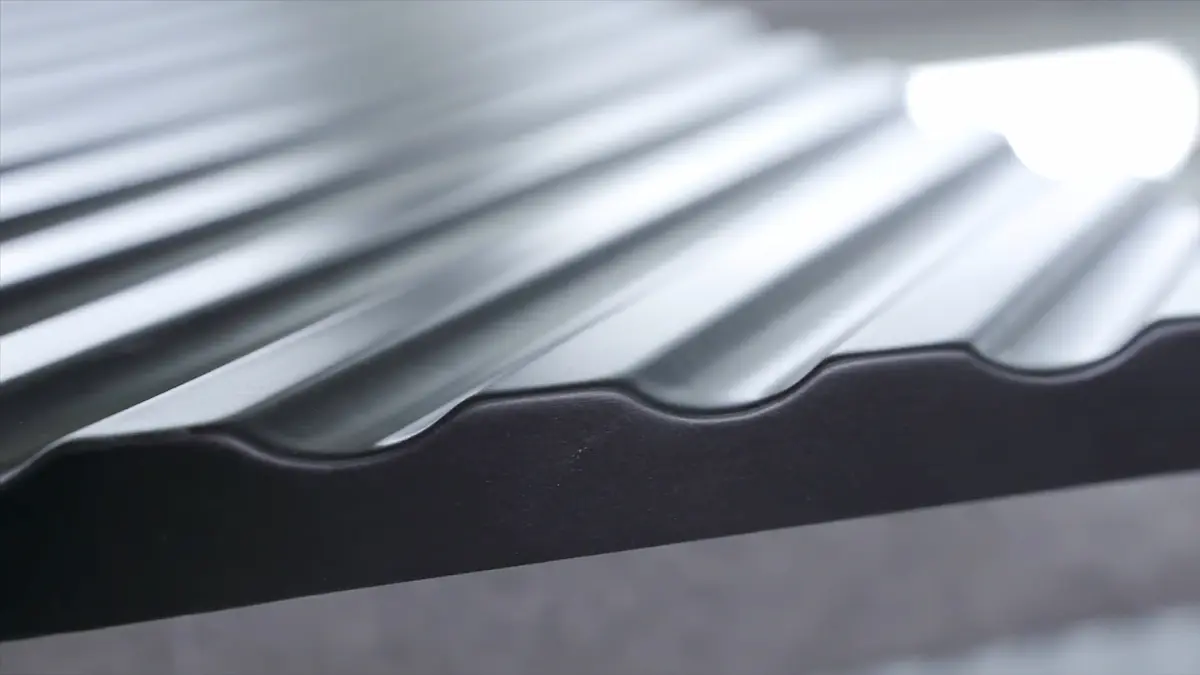
Cold stamping of sheet metal for steel productions
Cold stamping of sheet metal is one of the most widely used technologies when steel components with precise geometries, high repeatability and high mechanical strength must be obtained. Those who run a workshop or carpentry shop know that the real advantage lies not only in the shape that is obtained, but in the ability to produce stable parts from the first cycle, reducing rework and unplanned time in subsequent stages. The correct choice of material, press tonnage, and punch-machine coupling allows the process to be integrated with activities such as punching, bending, and welding, while maintaining control over deformation and edge quality.
Cold forming is often perceived as a simple process, but in manufacturing reality it requires a thorough understanding of the limitations of the sheet metal, especially when working with higher-strength steels or thinner thicknesses. A small variation in hardness or yield behavior can change the way the sheet metal flows in the mold, generating cracks, stretches or deformations that become critical when the part is to be assembled with other components.
Why many carpentries choose cold stamping
Cold forming allows sheet metal to be processed without bringing it to high temperatures, exploiting plastic deformation to achieve stable shapes with high repeatability. This brings a number of tangible advantages, especially when production must meet tight deadlines or supply lots with tight tolerances.
Among the most significant benefits are reduced dimensional changes, increased mechanical strength resulting fromcold work hardening, and the ability to process galvanized or prepainted steels without compromising the coating. Compared with hot stamping, the process avoids oxidation, maintains a more controlled roughness, and prevents heat shrinkage that would require additional finishing steps.
This is why many companies that produce enclosures, brackets, technical supports or structural elements prefer cold machining, especially when the component will have to be joined by welding, or bent later to obtain reinforcements or more complex geometries.
How the cold stamping process works
The process begins with the selection of sheet metal, which may arrive in coils or in sheets already cut by laser cutting. The quality of the material directly affects the behavior during deformation, because each alloy reacts differently to
In the press, the sheet metal is placed between the punch and die. The force exerted not only shapes the material but also changes its internal structure. Depending on the profile required, deep drawing, complex folds or extrusions can be generated, requiring very precise control of speed and tonnage. Excessive pressure can lead to micro-fractures, while insufficient pressure produces uneven edges or incompletely developed shapes.
In practice, operators know that actual behavior also depends on die wear. A punch-matrix profile that has lost a few hundredths of accuracy generates play that leads to significant differences between batches. This is why more structured workshops plan periodic inspections and adopt more abrasion-resistant materials for the most stressed areas.
Steel materials most commonly used in cold forging
Cold forming applies to a wide range of steels, but some show better response in fast deformation processes. Carbon steel is the most popular material, especially low-carbon versions that offer good ductility and controllable deformability. Galvanized steels provide surface protection and are widely used for cover components or brackets exposed to moisture, while stainless steels require more careful control because they tend to work harden more rapidly during deformation.
Where high precision or special mechanical strength is required, some manufacturers choose high-strength steels. These materials provide excellent performance but introduce more critical variables into the process: greater stiffness, higher springback and a narrower operating window, especially in deep drawing.
Evaluate the thicknesses and power of the press
The choice of sheet thickness and the force required in the press is one of the key decision points to ensure a stable process. A 1.5 mm steel may require a completely different force than a 2 mm stainless, not only because of the strength of the material but also because of the complexity of the geometry required.
In order to provide a useful reference for workshop managers, the following table gives approximate indications to help understand the order of magnitude of forces required based on material and thickness:
| Material | Indicative thickness | Deformation behavior | Operational considerations |
|---|---|---|---|
| Carbon steel | 1-3 mm | Good ductility and stability | Stable process even on complex geometries |
| Galvanized steel | 1-2.5 mm | Moderate strength, risk of work hardening | Attention to surface protection in deformation |
| Stainless steel | 0.8-2 mm | Increased rigidity and springback | Requires careful control of speed and lubrication |
Springback and deformation management in real production
One of the most common difficulties in stamping sheet steel is controlling springback. Even with a calibrated die, the sheet metal slightly changes its shape after deformation, especially on stronger steels. In contexts where stamping is supplemented with bending or welding, this behavior must be anticipated early in the design phase, because even a few tenths of a deviation can become a problem in subsequent assemblies.
Another critical element is the friction between sheet and die, which affects the distribution of stresses along the contact surfaces. In the presence of deep drawing or extensive deformation, insufficient lubrication can generate stretching, while excess alters sliding and leads to thickness unevenness. Companies that routinely process sheet metal, such as FGM, monitor these parameters constantly, intervening when the alloy-thickness combination requires a more refined cycle setup.
How to avoid the most common defects in cold molding
Many defects that emerge in cold forging depend on incomplete mold preparation or machine parameters that are inconsistent with the alloy used. The most frequent criticalities occur during deep drawing or in areas where the material is forced to flow over long guided surfaces. Recurring defects include:
- Tensile cracks generated by excessive stress in strained areas;
- Tearing due to uneven sliding or insufficient lubrication;
- Incomplete drawing when the force is not sufficient to close the intended profile;
- Uneven oiling that alters surface quality;
- Nonlinear edges creating problems in bending and welding.
In many cases, those who work with sheet metal on a daily basis immediately recognize the link between defect and production stage. Structured realities such as FGM pay close attention to consistency between cycle stages, because suboptimal stamping inevitably leads to rework in subsequent stages or to scrap that is difficult to reabsorb in mixed batches.
Integration of stamping with other sheet metal processing
Cold stamping is never an isolated process. In most cases, the blank is prepared by laser cutting or punching, while bending and finishing complete the required shape. The entire flow must be consistent, because the sheet metal changes behavior depending on the sequence of processing. A press that processes materials that have already been precisely cut allows for a more uniform distribution of stresses and reduces the formation of residual stresses.
A company that oversees the entire cycle, like FGM, can anticipate how stamping will affect finishing or bending, adjusting processing to avoid distortions in downstream stages. This level of consistency results in more stable parts, less scrap, and faster assembly times, especially when the finished part must integrate into complex structures.
The importance of mold design for final quality
Dies are the heart of cold forging and determine much of the quality of the process. The choice of tool steel, the surface finish and the precision with which the punch-machine profile is made directly affect the
Many carpentries outsource mold design to experienced partners because the actual behavior of the sheet metal inside the tool is not always predictable without direct experience. In complex processes, a simple radius change or contact point optimization can eliminate stress buildup and improve the life of the mold itself. This is also why FGM pays close attention to the relationship between geometry, alloy, and forming depth, because it is these factors that stabilize the cycle.
Quality control and stability of production cycles
In cold forming quality control, the final geometry is only one of the variables to be monitored. It is equally important to check the part for internal stresses that could manifest themselves during bending or welding. In fact, some parts may appear correct as they exit the press, but deform slightly when subjected to new stresses.
To avoid snags, many companies introduce intermediate hardness or deformability checks on the most sensitive samples. These are quick checks, but essential to ensure a truly stable process. When production is managed with this logic, cold stamping becomes one of the most reliable processes in the entire sheet metal cycle: consistent, predictable and with minimal scrap. It is precisely this type of integrated management that allows companies like FGM to maintain continuity even on variable batches or non-standard geometries. Contact us, for reliable and efficient service that is safe for your production.