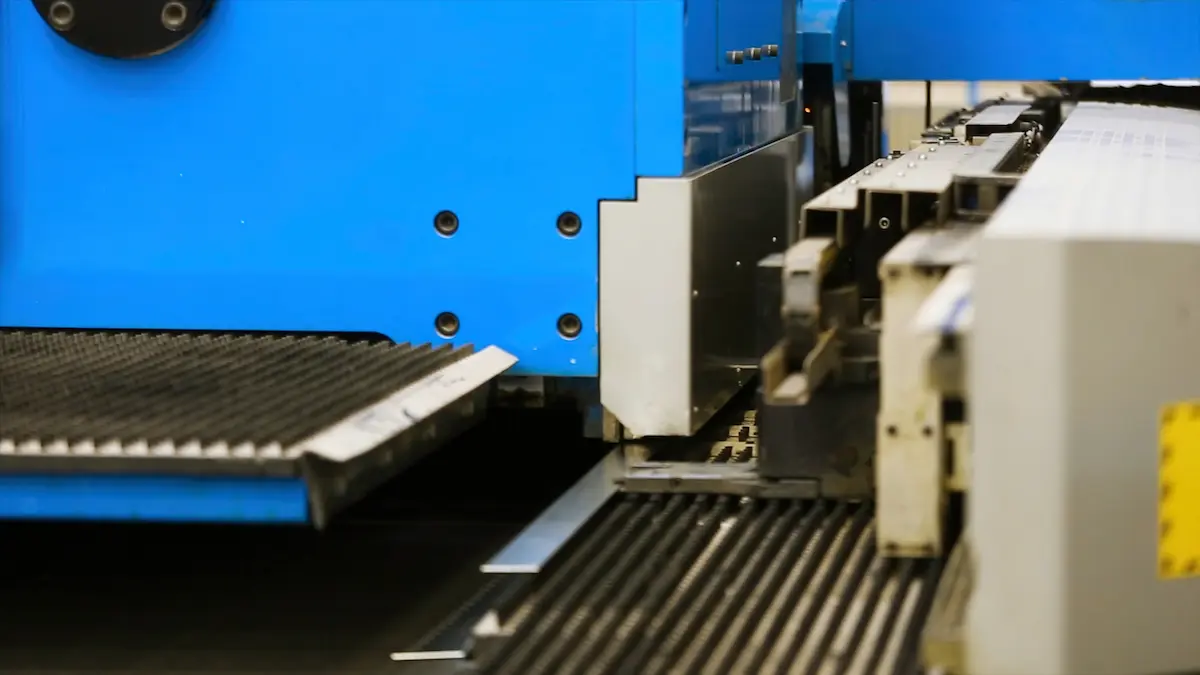
The operating value of sheet metal machinery and storage
Sheet metal machines represent the set of technologies that enable a metal sheet to be transformed into a structural, aesthetic or functional component through a sequence of processes involving cutting, forming, punching and assembly. In evolved workshops such as
The effectiveness of these machines depends on their ability to handle different materials and thicknesses without compromising on cutting quality or dimensional stability of the part. Having a modern fleet of machines also requires a warehouse system capable of feeding each process in a scheduled manner, coordinating inventory, formats and internal logistics. This is how the combination of cutting, bending, calendering and welding technologies and a warehouse capable of sustaining their pace is a crucial element in ensuring operational accuracy and technical consistency throughout the sheet metal processing process.
Basic machines for sheet metal processing
Sheet metal processing requires a set of specialized machines that cover the cutting, forming and assembly stages. Fiber laser cutting forms the basis of the process because it enables precision work on large sheet sizes and significant thicknesses, such as the 2000×4000 mm and 25 mm thicknesses handled by FGM.
Laser speed and accuracy enable complex geometries with clean edges, facilitating subsequent bending and welding steps. Sheet metal bending using automated press brakes, on the other hand, enables the handling of radii, angles and bending sequences with high repeatability, a key element when the part must fit into complex assemblies or contain very tight tolerances.
Alongside laser and bending, sheet metal calendering machines allow cylindrical or conical bends to be generated with continuity and uniformity of radius, useful in structural shells and components intended for circumferential welding.
Integration of the FGM fleet into the production cycle
The value of sheet metal working at FGM comes from an automated machinery fleet that supports the entire production cycle, from part design to physical fabrication. The
After laser cutting, the flow goes to the bending machines, where handling angles, radii and multiple bends requires consistent reliability and repeatability. The sheet metal bending machines installed at FGM enable the processing of components of different sizes while maintaining the dimensional consistency required for subsequent steps.
Calendering and welding, integrated into the process, allow the component to be completed with continuity, reducing displacement and optimizing cycle time. This coordinated approach allows complex parts to be handled efficiently, ensuring high quality and reducing the need for rework.
Sheet metal machining warehouse and impact on production
The sheet metal working warehouse represents a strategic element because it allows machines to be continuously fed, managing batches, materials and formats with an orderly and traceable flow. In a modern production cycle, the warehouse is not simply a storage facility, but an organized system that integrates handling, material identification, stock management, and sheet preparation for further processing.
This means avoiding delays in cutting, reducing waits due to sheet metal procurement, and ensuring a smooth transition between operations.
A well-structured warehouse also makes it possible to optimize material utilization through constant coordination with nesting software, which defines how to place parts on the sheet to reduce waste.
The ability to run different batches in parallel, associating each sheet with the relevant technical specifications and intended machine path, allows for increased productivity and maintains an even balance between workloads, machine availability and production demands. This approach is key to ensuring reliable lead times, delivery reliability and consistent component quality.
Technical criteria for machine selection based on materials, thicknesses, and volumes
Machine selection depends on characteristics such as thickness, alloy type, geometric complexity, and quantity required. Laser cutting is ideal for thin and medium materials, where precision and edge cleanliness are a decisive advantage. Plasma finds its place in high thicknesses and less complex geometries, while die stamping stands out when parts must be made in large quantities with high repeatability. In bending, the choice of machine depends on the length of the part, the number of bends and the required consistency between them, while in calendering, radius, thickness and manageable formats count above all.
| Technology | Materials | Thicknesses | Applications |
|---|---|---|---|
| Fiber laser cutting | Steel, stainless steel, aluminum | Up to 25 mm | Complex geometries, clean edges, high precision |
| Bending | All alloys | Thin and medium sheets | Corners, radii, and multiple folds on structural parts |
| Calendering | Steel, stainless steel, aluminum | 1-10 mm | Regular cylinders, cones and bends |
| Welding | All alloys | All manageable thicknesses | Assembly of structures and finished components |
Impact of automation and warehouse on the quality of sheet metal processing
Machine automation and integrated warehouse management enable a linear production flow with reduced tooling times and business continuity that improves the quality of finished parts.
The ability to automatically feed machines with materials taken from the warehouse reduces the risk of human error, ensuring greater consistency in adherence to tolerances and higher speed in repetitive cycles. Integration between machine fleet and warehouse also allows machining to be planned more effectively, reducing idle time and improving machine saturation.
An integrated system offers better control over parameters such as cycle time, repeatability of processing and traceability of the sheets used. This approach, which characterizes FGM’s internal management, ensures that each stage is calibrated to the customer’s needs and that each component goes through a process in which quality, precision and timeliness are guaranteed by a modern technological infrastructure and warehouse management geared to continuous production and stock optimization.
Effects of technical choices on final quality and production competitiveness
Machine selection, warehouse organization, and the ability to integrate the cutting, bending, calendering, and welding stages determine the value of sheet metal working in terms of quality, cost, and competitiveness. Inadequate technology or a non-optimized warehouse generates delays, scrap and dimensional variations that are difficult to compensate for in subsequent stages. In contrast, a modern machine park and efficient logistics enable consistent components to be produced in less time, with higher quality and greater process control, making the entire supply chain more stable and competitive.
Need a reliable partner? Contact us now for your sheet metal fabrications!