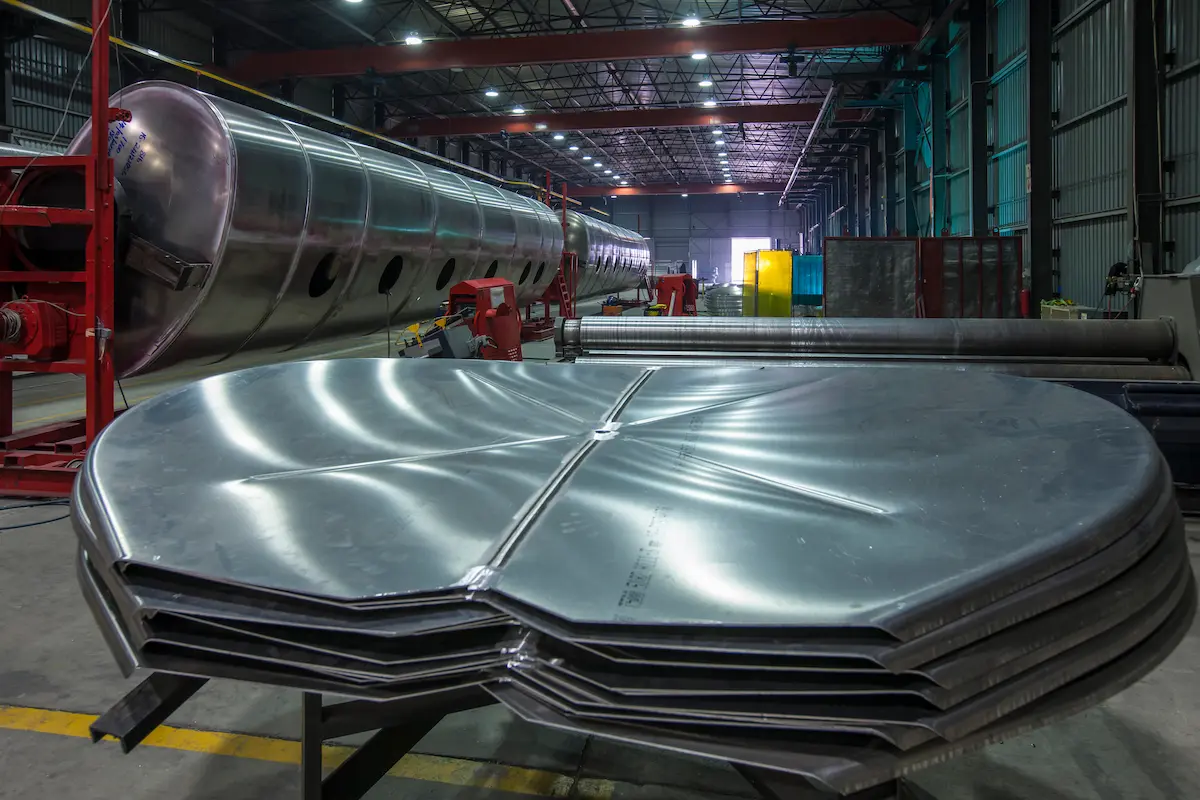
Aluminized sheet metal and aluminized steel in technical processing and industrial processes
Aluminized sheet metal is not simply coated steel: it is a material designed to resist corrosion and high temperatures while maintaining good machinability during cutting, bending, and welding. The aluminum-silicon alloy coating creates a stable barrier that protects the inner steel and changes its behavior during machining. For those handling technical productions or components destined for thermal cycles, this means being able to count on a protected surface that does not easily deteriorate and an internal structure that maintains the rigidity typical of steel. To get your bearings early on, it is useful to operationally compare the performance of aluminized steel with that of more common steels such as galvanized and stainless.
| Parameter | Aluminized sheet metal | Stainless | Galvanized |
|---|---|---|---|
| Heat resistance | High (Al-Si coating) | Very high | Limited |
| Corrosion resistance | Good | Excellent | Average |
| Mechanical workability | Very good | Good but stiffer | Good |
This first comparison immediately shows the unique position of aluminized steel: it is not as valuable as stainless steel, but it holds heat much better than galvanized; it is more workable than stainless and more stable than plain carbon steel. The aluminum-silicon coating makes it ideal when a part must go through multiple processing steps, maintain surface protection, and endure high temperatures without distorting. On the shop floor it means having a more stable sheet metal that reacts predictably even when the layout is complex or when the part must be bent and then welded.
Operating properties of aluminized sheet metal that really matter on the shop floor
The properties of aluminized steel become interesting not so much because of its chemical composition but because of the way the coating interacts with stresses. The Al-Si layer creates a surface that is
Unlike galvanized sheet metal, which tends to show surface changes after tight bends or intensive cutting, aluminized coating withstands deformation better as long as the process is handled with suitable tools and distributed pressures. The behavior is closer to stainless, but with greater elasticity that reduces the risk of micro-cracking. This feature is useful in designs that must also maintain protection along the bending lines, such as in technical profiles produced with logic similar to that applied in controlled industrial bending.
For those who work with sheet metal on a daily basis, the parameters that really affect them are:
- Ductility of the coating during bending and calendering;
- Thermal resistance in processes that generate continuous heat;
- Adhesion of the Al-Si film to the base material after intense deformation;
- Limited sensitivity to corrosion even along cut edges;
- Dimensional stability in sections where the plate is only partially constrained.
These elements help to understand why the material is a frequent choice in industries developed on mixed cutting, bending and welding cycles, without necessarily resorting to more expensive stainless when extreme strength is not needed. A behavior that is reflected in combined machining, as is the case in parts intended to be cut and then finished with tracings similar to those developed in complex sheet metal designs.
How aluminized sheet metal performs in industrial cutting
In cutting, aluminized sheet shows an intermediate behavior between stainless and galvanized: it absorbs heat uniformly and keeps the coating relatively stable even when the laser path is dense with micro-tracks. The main risk is degradation of the protective film in very dense cutting zones, where the thermal concentration increases rapidly; in these cases the edge may have small areas with less protection that must be evaluated according to the type of application.
Laser cutting offers particularly clean results in low to medium thicknesses, while plasma may require finishing to remove residue or small burrs. With oxyfuel, the situation changes: the coating can burn more noticeably, making the technology less suitable if the goal is to maintain original surface protection. For precision machining or technical components, laser remains the most stable solution, especially in parts that require subsequent bending or welding.
The quality obtained in cutting directly conditions the behavior of the part in subsequent stages, as is the case in processes that require high precision in complex developments. Therefore, in jobs involving many variables, it is useful to set up machining with logic similar to that applied in industrial laser sheet metal cutting, where thermal stability is an essential requirement.
Aluminized sheet metal bending
In bending, aluminized sheet metal is distinguished by its ability to keep the coating intact when the radius is adequate and the tools distribute pressure evenly. The surface tends to score more easily than stainless, but less so than galvanized-it is a middle ground that allows controlled bending without sacrificing surface protection. Al-Si coating tolerates deformation well as long as it is not too concentrated, but it can create micro-abrasions along contact zones if punches and dies are not properly calibrated.
The tendency for work hardening is moderate, but must be considered when making successive folds or folds very close together. Too tight a radius can put stress on the coating, leading to small surface “splits” that do not compromise the structure but reduce corrosion protection. In projects where the bend is performed as a preparatory step for later welding, it is necessary to assess this behavior and provide wider margins than would be the case with bare sheet metal or stiffer stainless. The same is true in designs that require a very precise radius, similar to those calculated in the developments covered in the analyses of hydraulic bending and alternative industrial technologies.
Behavior in calendering and bending
In calendering, the aluminized sheet brings out one of its most useful characteristics: the ability to maintain a progressive curve without losing coating adhesion. Al-Si film resists stresses well when deformation is distributed, but is more sensitive at points where the sheet comes into direct contact with the roll. For this reason, the passes must be softer than for bare steel: the material is docile, but requires well-controlled pressures to avoid micro-abrasion that would reduce surface quality.
It is in the bending of wide panels that aluminized sheet metal shows its value. The internal steel maintains rigidity, while the coating limits oxidation even though the part will later be subjected to thermal cycling. 316 stainless remains superior in extreme environments, but aluminized offers a more balanced machinability-performance ratio for many technical productions. This balance is one reason why many shops prefer to outsource bending management to companies with an integrated process: those who know aluminate’s behavior well are able to anticipate material reactions during passes and set up a more stable development.
Weldability of aluminized steel
The behavior of aluminized steel in welding depends on how the coating reacts to heat. The Al-Si layer tends to protect the surface, but near the heat affected zone it can change the fluidity of the weld pool. A well-calibrated MIG or TIG weld will maintain a clean joint, but it is critical to manage partial removal of the coating at critical points or to choose parameters that allow it to pass through without excessive burning.
Those who weld aluminate regularly know that its real complexity is not in the melt, but in the part’s ability to maintain geometry after cooling. If the sheet metal has been bent or curved, the coating may have areas of residual stress: too aggressive welding could amplify these differences. Therefore, in productions that require precision (such as those machined with
When to choose aluminized sheet metal in an engineering project
Aluminized sheet metal is a rational choice whenever a combination of thermal resistance, workability, and corrosion protection is needed without having to resort to more expensive materials. It is particularly effective in components that face moderate thermal cycles, such as crankcases, ductwork, industrial plant structures and panels with progressive curvatures. The ability to maintain protection even after a bending or calender pass makes it ideal in parts that require uniform appearance or consistent protection over time.
Many carpentries choose it when they need to make a part that will be sequentially cut, bent and welded, because the material remains predictable throughout the production cycle. However, consistent results require a thorough understanding of the behavior of the coating and knowing how to set up the development. This is one reason why those who manage technical productions tend to work with workshops that operate on a full supply chain: it allows them to avoid cumulative defects and to work with a material that expresses its best only with a consistent process.
Behavior of aluminized sheet metal in major industrial processes
| Processing | Advantages of aluminate | Limitations to consider |
|---|---|---|
| Laser cutting | Clean edge, good thermal stability | Sensitive to micro-heating |
| Bending | Ductility of coating, low tendency to cracking | Surface marks if the punch is too aggressive |
| Calendering | Smooth curve, good uniformity | Requires gentler passes |
| Welding | Clean joints, good structural stability | Possible degradation of coating in HAZ zone |
Evaluation of aluminized sheet metal and its use in technical processing
Aluminized sheet metal strikes its best balance when a combination of heat resistance, edge stability and good machinability is needed along a multi-pass cycle. Al-Si coating retains its properties even after progressive bending or extensive bending, as long as the pressure distribution is controlled; at the same time, it keeps costs down compared to stainless materials without sacrificing surface protection. In components that require bending, welding, and calendering, the difference is not just the material, but the consistency with which each step is connected to the next.
Many companies discover the value of aluminate only when they have to produce advanced geometries or mixed batches, because it is in those situations that the quality of the process affects more than the material data sheet. Careful management of deformation, heat and coating results in components that maintain the performance for which they were designed over time. It is an approach that requires field experience, knowledge of material behaviors, and the ability to integrate cutting, bending, bending, and welding without forcing.
For those working with technical parts or complex production runs, relying on a partner who knows aluminized sheet metal well means reducing scrap, retouching, and downtime. Workshops that manage the entire cycle (cutting, forming and assembly) in-house ensure greater stability of the final result, especially when the component must maintain tight tolerances or undergo thermal stress. FGM operates with this logic: treat sheet metal as a complete system and not as a sum of individual processes, so each step supports the next and the material performs to the best of its ability. Contact us if you need an efficient and fast partner for your machining.