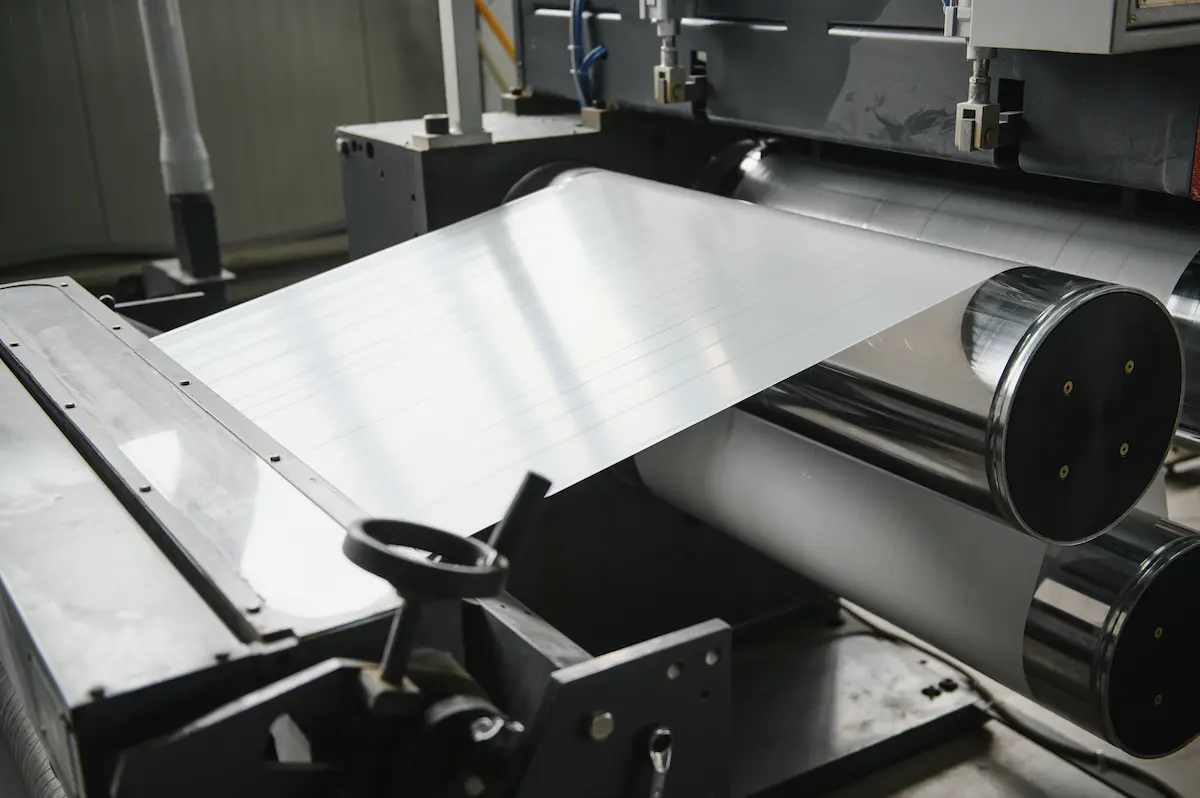
Stainless steel sheet 304 and 316 in technical machining and custom manufacturing
When it comes to 304 and 316 stainless sheets, the difference is not played out on the material sheet, but on how these steels react to real processes: laser cutting, bending, calendering, welding, and deep deformation. This is where stainless shows its true behavior. People working on the shop floor or in the carpentry shop do not choose the material based on its chemical composition, but on its
| Parameter | Inox 304 | Inox 316 |
|---|---|---|
| Workability | Good, more ductile | Good but more rigid |
| Springback | Moderate | Major, to be compensated |
| Heat stability | Good | Excellent, suitable for severe environments |
| Weldability | Very good | Very good, more stable in critical joints |
This operational difference between the two steels is what really interests those who have to manufacture: knowing whether a plate will accept a narrow beam without work hardening, whether it will maintain straightness after laser cutting, or whether it will absorb expansion well during a weld. These are dynamics that affect time, scrap and final quality far more than any list of chemical elements. And that is why those working with engineering components expect consistent materials not only on paper, but during subsequent processing.
Properties of stainless steel useful for those who have to work with it
The properties of stainless only become relevant when they are transformed into actual behavior under mechanical or thermal stress. 304, which is more ductile, often allows more aggressive machining without losing stability. 316, thanks to molybdenum, retains better corrosion resistance and a more stable response to high temperatures, but tends to
The surface also affects: a BA finish heats up less than a satin finish, a 2B finish is more stable in cutting than a polished sheet that reflects part of the beam. These aspects become central when working with complex geometries or when the component requires a next step such as
From a production perspective, the parameters that really make a difference are:
- Ductility in tight radii and progressive deformation sections;
- Residual stiffness after cutting, influential in the folding stages;
- springback, which is more evident in higher quality stainless;
- Thermal stability in areas with many micro-tracks;
- Cracking sensitivity, especially for 316.
For those who must maintain consistent dimensional controls, these differences are far more useful than any chemical composition. A sheet that work-hardens unevenly complicates bending, a sheet that reflects the laser beam too much slows cutting and increases the possibility of defects. On the shop floor, one does not look for the most “prestigious” stainless, but one that allows stable production over variable batches.
How 304 stainless performs in laser cutting and other cutting technologies
In laser sheet metal cutting, 304 stainless steel is one of the most predictable materials. It absorbs energy well, maintains a controlled thermal zone, and allows clean cuts even in complex paths. The biggest risk concerns heat buildup in areas with many micro-geometries, especially on small holes. This is where parameter adjustment and the quality of the laser source make a difference, because excess heat can generate small deformations that become problematic in bending or assembly.
316 stainless, on the other hand, tends to heat less evenly when the geometry is very intricate, especially if the sheet has a very reflective finish. The edge quality still remains high, but the behavior is more sensitive to cutting parameters. This is particularly noticeable in components that require the highest edge accuracy before bending, as is the case in fabrications based on complex laser designs.
In thin thicknesses both stainless steels perform well, but when certain limits are exceeded it is 304 that provides higher speed and more controlled burr. In panels intended for successive deformations (such as multiple bends or fillets) this makes 304 the preferred choice for maintaining a balance between cost, productivity and stability.
Differences in bending between 304 and 316
Bending is one of the processes where the difference between 304 and 316 stainless emerges most clearly. 304 is more forgiving: it accepts tight radii, tolerates corrections well, and tends to distribute stresses more evenly. It is a material that offers good predictability, especially in medium thicknesses, and maintains consistent behavior even when the bend is not perfectly linear.
316, on the other hand, shows a greater tendency to work hardening, especially when bending is done near holes or areas already deformed by cutting. This requires larger radii and closer control of springback. In components that require precision and repeatability, such as welded assemblies or structures that must provide tight tolerances, this characteristic must be managed from the outset by calibrating the development with an approach similar to that used in the designs covered in the development and radius calculation analyses.
The difference is not only in the force required: it is in the way the material stabilizes after deformation. 316, once bent, may show slightly different chrome plating in the bend zone, a sign of greater local stress. 304, on the other hand, tends to maintain a more uniform appearance and a softer reaction along the entire line.
Behavior of the two stainless in calendering and bending
In calendering, stainless steel reveals characteristics that often emerge only when the part is already on the center roll. The 304 is more docile: it accepts progressive bends without stiffening too much and maintains a softer curve line even when the sheet is thin. This is useful behavior in wide panels, where dimensional stability depends not only on the machine but precisely on the material’s ability to distribute stress.
316, on the other hand, requires more attention. Its superior strength is a structural advantage, but it makes bending thin panels more complex and creates small differences in radius closure, especially where the sheet has holes, cutouts, or areas already weakened by cutting. This is evident in fabrications that require very precise bends or that involve assembly where the panel must fit together without forcing. The passes must be more progressive and the rollers adjusted with a more pronounced springback in mind.
True weldability of 304 and 316 stainless
From a welding point of view, both inoxs offer excellent results, but with differences that become crucial at critical joints. 304 welds easily and handles expansion well; it allows clean joints with limited risk of porosity if the parameters are correct. 316 is more stable in aggressive environments and maintains superior strength in the thermally altered zone, but shows greater sensitivity to residual stresses, especially when the plate has been bent or calendered before welding.
In components where welding needs to be particularly clean (such as panels intended to be machined with precision MIG/TIG processes), 316 offers remarkable performance, but requires flawless edge preparation and more careful control of temperatures between passes. The real difference lies in the way the part retains its geometry after cooling: 304 tends to “snap back into place,” while 316 can exhibit slight stresses that must be compensated for during assembly.
When to choose 304 stainless and when to choose 316 in a real project
The choice between 304 and 316 is based not only on the environmental context, but on the machining the part will have to undergo. Many engineers choose 304 because of its greater machinability, especially when the part requires a lot of deformation: complex cuts, multiple bends, progressive bending, or machining that combines several techniques on the same part. It is the material that provides the best balance between quality and stability for variable productions.
316 comes into play when superior performance is needed: chemical resistance, thermal stability, durability in harsh environments, or components that must maintain perfect geometry even after demanding welds. It is the ideal material for structures exposed to corrosive agents or for parts where long-term safety and reliability are priorities. However, its higher stiffness requires a more controlled production cycle, with calibrated steps and more attention in the bending and calendering stages.
Comparison of 304 and 316 stainless steel in major machining operations
| Parameter | Inox 304 | Inox 316 |
|---|---|---|
| Laser cutting | Faster, controlled burr | Excellent edge, parameter sensitive |
| Bending | Narrow radius, moderate return | Wider radius, greater return |
| Calendering | Softer bending | More stiffness, progressive passes |
| Welding | Excellent and predictable | Better in strength, but more sensitive to tension |
| Deep deformations | More ductile and stable | Stronger but less forgiving |
Final quality and necessary checks on stainless steel after processing
A stainless sheet metal is considered “quality” not when it is perfect in origin, but when it retains its geometry after passing through multiple processes. In real development, especially in mixed batches, what matters is edge stability, radius consistency, and the material’s ability not to generate twisting or heat haloes that affect the assembly stage. 304 is more predictable in this regard, while 316 provides better performance but requires more uniform parameters.
The most relevant checks include: deformation near the tracks, areas that have accumulated heat during cutting, consistency of folds with respect to theoretical development, and tightness of welded joints. Many defects arise not from machining but from a combination of uncoordinated processes. This is why a supply chain view (cutting, forming, finishing) allows for more reliable results, especially when the part must integrate with other metal parts produced to close tolerances.